
Curvism Concept (2025)
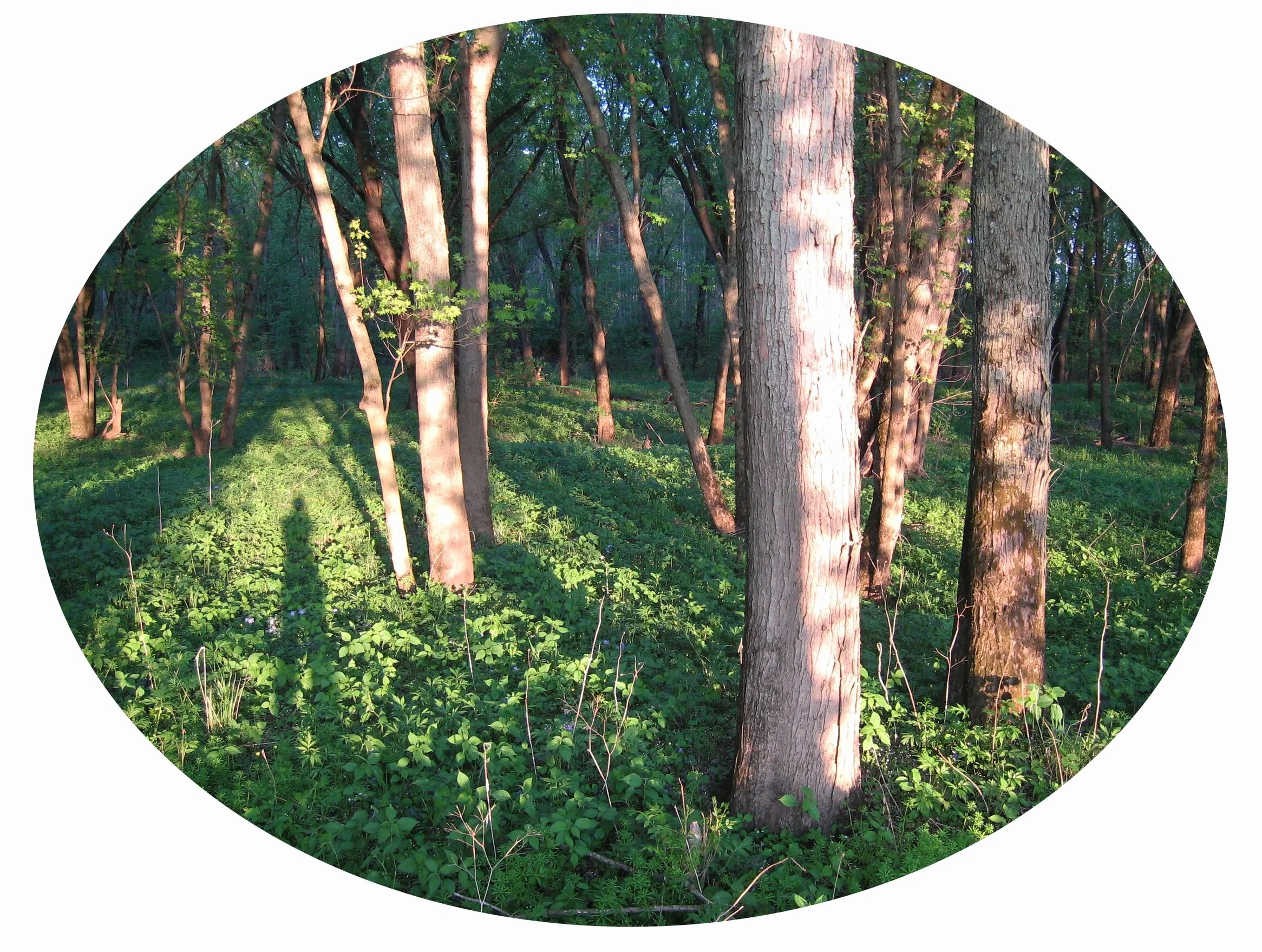
Curvism grew out of the landscape. The horizon, the hills and valleys, the flow of water, the shape of rocks, plants and animals, and the human figure are composed of curves. Nature is curved with few exceptions. Nature created Curvism.
Curvism speaks of nature and the earth, the environment and the ecological. It is about wholeness and diversity and concerns itself with quality. Curvism views the world from a more female perspective. Curvism values the senses and the sensual, the intuitive and the experiential, the emotions, empathy and compassion. It is orientated to cycles and the non-linear, to both spontaneity and reflection. Curvism advocates for the arts and humanities. Curvism involves itself with caretaking, cooperation, and community. Curvism is concerned with relationships and ultimately involves love.
The man-made world sharply contrasts with the natural world. Western culture is built from a male perspective. It is the view of reason and logic, numbers and abstractions, science and technology, power and aggression, conformity and competition, materialism and commercialism, quantity and packaging, fragmentation and separation. This worldview is symbolized by the straight line, the rectangle, the square and the cube. During the 20th century, the power of this man-made worldview increased exponentially.
Curvism believes we have boxed ourselves into our own world, isolating ourselves from the curved spiritual world of nature. We live and work in boxes, staring into boxes.
For too long the spiritual world of nature and the female qualities of humans have been dominated and repressed by the forces of the man-made western worldview.
Indeed, science, technology and commerce have provided great knowledge, tools and gifts to mankind. The Modernism of the early 20th century extended the Enlightenment’s grand narrative of progress. But there were disappointments, exclusions and consequences brought to light by the Postmodernism period at the end of the 20th century.
In 2010 philosophers Robin van den Akker and Timotheus Vermeulen proposed the concept of Metamodernism to describe a cultural trend transitioning towards a renewed hope, an informed naivety; a shift to sincerity and authenticity, to an affective, romantic view with a belief in the possibility of utopias. They envisioned a synthesis evolving beyond modernism and postmodernism as the way forward.
There has been a growing awareness that the modern – postmodern Western cultural square worldview, dominated by science, technology and commerce and cannot feed the soul’s deeper longing or satisfy spirituality’s higher aspirations. Curvism believes that cultural renewal and a new balance can be achieved by moving through the curvistic worldview, symbolize by the curved line, the circle, and the ellipse.
Artist Steve Firkins first began to use the word Curvism in 1978 to describe his art and philosophy. Firkins grew up in Blue Earth, Minnesota. In high school he began photographing nature and the curved great plains landscape. He earned an art degree in college and a master’s degree in psychological counseling. Through the 1980s and the 90s he had regional art shows in the Midwest titled Curvism. He had his first major art show debut in Minneapolis at Flanders Contemporary Art Gallery in January 1998 titled The Theory of Curvism. Since then he has continued to exhibit and expand his Curvism concept and art.
The 20th century and modern art began with Cubism. Firkins spent the end of the 20th century finding and illustrating a way out of the box and the square worldview. Curvism, as conceptualized by Firkins, has been clear and consistent from the very beginning as articulated above. Firkins has spent the 21st century exclusively exploring the curved worldview.
There have been a number of artists who have discovered the term Curvism and have been using it to describe their art. They too recognize the visual difference between the man-made, cubed world and the curved world of nature.
In 1994 Belgium artist Iban Van Der Zeyp began using the word Curvism. His art style has been very cubistic. Instead of flat faceted pieces put together he uses rounded and shaded pieces put together. There have been other artists who have identified with Curvism who also have this curvy style of Cubism. Two notable exceptions, Ricardo Chavez-Mendez (who has been using the Spanish Curvism word Curvismo since 2005) and Amaury Dubois (who has been using the French Curvism word Courbisme since 2005), have a more swirly surrealistic style of Curvism.
Sculptor Richard Zawitz discovered the word Curvism in 2014 and began applying it to his curved sculptures. He has drawn inspiration, not only from nature, but also Taoism, zen philosophy and quantum theory and applying them to his conceptualization of Curvism.
More recently, 2024, Spanish artist Federico García Sala has been using the term Curvism. He writes about the human historical evolution away from living in the curved world of nature and the adverse consequences of living in an unnatural manmade cubistic worldview.
Curvism as an art movement is growing. The 21st century is ready and needing what the Curvism paradigm shift has to offer. Although not using the term Curvism yet, architects are embracing and advancing curvilinear designs in what is being described as organic architecture, biomorphism, and neo-futurism.
Architect Frank Gehry made the transition by incorporating curves into his cubistic building designs. Examples include the Weisman Art Museum (1993) in Minneapolis, the Guggenheim Museum Bilbao (1997), and the Walt Disney Concert Hall (2003).
The Niterói Contemporary Art Museum, in Rio de Janeiro Brazil, by Oscar Niemeyer (1996) has a disc spaceship look.
The Smithsonian's National Museum of the American Indian (2004) draws inspiration from indigenous history and its connections to nature.
The Beijing National Stadium, famously and appropriately nicknamed the "Bird's Nest," built for the 2008 Summer Olympics by architect firm Herzog & de Meuron is iconic for its curvilinear interwoven thread design.
Architect Zaha Hadid became known as the “Queen of Curves” for her curve focused buildings. The London Aquatics Centre (2011), the Heydar Aliyev Cultural Center in Baku, Azerbaijan (2013), the Wangjing SOHO office complex in Beijing (2014), the Donadaemun Design Plaza in Seoul, South Korea (2014) are just a few prime examples of her curvistic designs.
The Aero Hive Office Tower by Suraksha Acharya-Midori Architects in Hong Kong (2018) is an aerodynamic skyscraper featuring two twisting towers. Its design utilizes wind flow and multiple green atriums to help with ventilation and special cladding to bring natural light into the interior.
Many corporations are swiftly building and moving into curvistic complexes. Apple Park office campus in Cupertino California features a circular ring design with landscape gardens in and around the ring (2017). As part of their headquarters in Seattle, Amazon incorporated three biodome spheres (2018), bringing nature into the work environment. Corporations are realizing the psychological benefits of nature based design on employees and doing business.
The Dubai Museum of the Future was designed by architect Shaun Killa of Killa Design, with engineering by Buro Happold. It is a vertical, elliptically shaped ring structure, with an elliptical opening. It is clad with shiny stainless steel with contrasting black Arabic curved calligraphy overlayed.
The Lucas Museum of Narrative Arts is set to open in Los Angeles in 2026 and has a futuristic, organic “spaceship” appearance. It certainly can be considered Curvism!
Most of the buildings identify above, have gone to great lengths to incorporate sustainability practices in their completed projects. Features can include : interior natural gardens and exterior landscaping, solar and renewable energy, conscientious water usage, and incorporating environmentally sourced and recycled materials. Sustainability is part of the curvistic concept.
The man-made square worldview created the science, technology, computer programs, construction techniques, and advanced materials, to make such curvistic designs possible. Yet it is the physical curvistic qualities of line and shape that make these buildings more human friendly and livable. Curvism aesthetics are increasingly being incorporated into interior home decor designs and products.
Care and compassion for the environment are curvistic qualities. They can guide, inspire and motivate; science, technology and commerce; for something more valuable than more knowledge, machines and money. Curvism theory believes that as humans interact more with curvistic environments and nature directly, humans will then integrate the wider range of curvistic human qualities that have been suppressed by the square world view. Curvism architecture and aesthetics can help us transition to a more balanced and livable culture.
Curvism aesthetics as conceptualized by artist Steve Firkins advocates for the exploration of the circular, elliptical, curved worldview. For the past 500 years plus, paintings and pictures have been made using a square and rectangular framing format. Look around you at the pictures you see on the walls, in your books, on your screens and out your windows. Ninety nine percent of the time you will see a rectangular or square worldview. Circular and elliptical pictures are the exception. Even the Curvism painters named above are restricting themselves to the manmade square – rectangular framed view. Firkins has been exploring and immersing himself into the curvistic elliptical and circular formatted worldview all his artistic life. The aesthetics and compositions are uniquely different using elliptical and circular formats for picture making and incorporating curves into designs. There are psychological differences and benefits that even scientific studies can verify. For a glimpse of this view, Firkins suggest lacing your fingers together, then raising your arms above your head. With your elbows to the sides, bring your hands slightly forward to the top of your view. This makes an elliptical viewing window. You cannot see any square corners. This is how we naturally see using both our eyes; a horizontal ellipse. We have been conditioned not to see this curvistic worldview. Firkins has long encouraged the artistic community to explore this way of seeing and experiencing the world.
The concept of Curvism, it’s aesthetics, art, and philosophy can change our worldview and help culture move forward to a more hopeful and loving future.